BEYOND THE KEYS /
Ownership Guides
Thien Nguyen
English
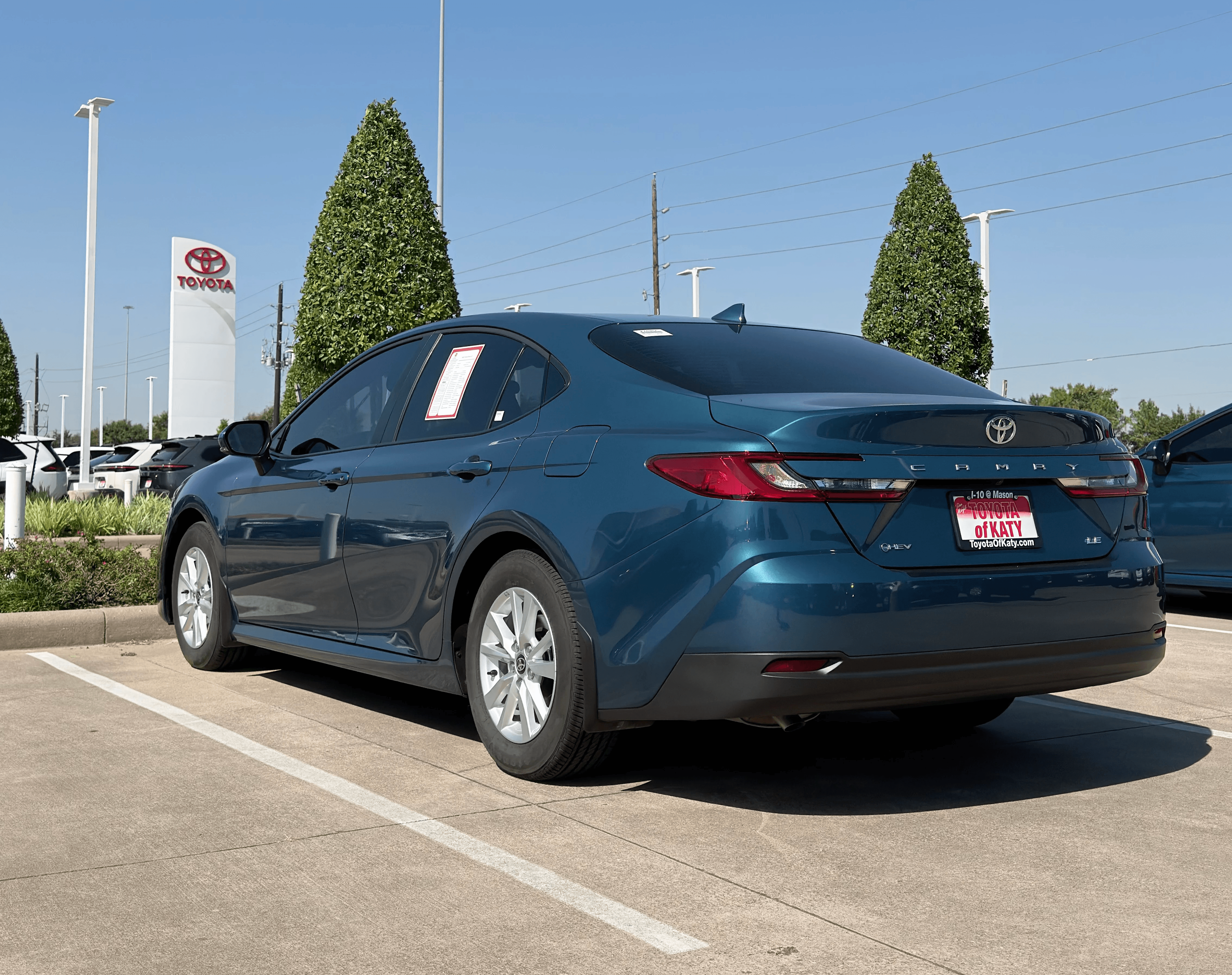
Corolla, Camry, or another fuel-conscious Toyota—here’s why the dashboard number might disappoint, and when it deserves attention.
You bought your Toyota partly because you wanted fewer emotionally significant visits to the gas station.
Maybe it’s a Corolla. Maybe it’s a Camry Hybrid, and you were ready to become mildly insufferable about fuel economy.
Then you look down a week later and see a number that feels suspiciously below expectations.
Before you accuse the car of résumé fraud, let’s look at what it’s measuring.
Your parked car is still spending energy
Here’s an ownership detail that deserves more attention:
Keeping the car comfortable while going nowhere still costs energy.
Waiting in the school pickup line. Sitting outside a restaurant. Finishing a phone call in the driveway because the house contains responsibilities.
In a conventional gasoline vehicle, an idling engine burns fuel without adding miles. Your average takes the hit.
A hybrid can shut its engine off while stopped, but the A/C still needs energy. Depending on conditions and battery charge, the engine may restart to support that demand.
The hybrid battery is a buffer, not a bottomless utility account.
You may have driven gently all week. You also operated a small, beautifully upholstered waiting room.
A short trip can be surprisingly expensive per mile
A three-mile errand sounds economical. But the engine needs time to reach an efficient operating temperature, and a sun-baked cabin asks a lot from the A/C right at the beginning.
On a short journey, those demands make up a bigger share of the trip.
FuelEconomy.gov notes that under very hot conditions, A/C use can reduce a conventional vehicle’s fuel economy by more than 25%, particularly on short trips. Hybrids are affected by climate-control demands, too; the exact impact varies.
The useful move? Combine errands when practical, let trapped cabin heat escape briefly, and avoid unnecessarily long parked cool-downs.
Keep yourself comfortable. This is Houston. Nobody needs to arrive at H-E-B medium-well.
Hybrid doesn’t mean every drive will be a personal best
A Camry Hybrid can recover some energy during braking and use electric power under suitable conditions. That makes it particularly good at certain kinds of driving.
It doesn’t make high speeds, hard acceleration, or maximum A/C demand free.
And a short, cold-start trip isn’t the same test as a longer drive with the powertrain warmed up.
Your friend’s impressive dashboard photo might represent a completely different route—or one particularly flattering trip.
Compare your Toyota with its own normal routine before entering the group-chat MPG Olympics.
Make sure you’re grading the right average
An average needs context.
Depending on your vehicle and display settings, you may be looking at fuel economy for the current trip, since a reset, or another measurement period. An average covering a handful of miles can swing dramatically.
If it includes delivery-day idling, short demonstration drives, or your first evening exploring the screen with the vehicle running, it isn’t a clean picture of your regular commute.
Check what period the display represents. If you reset it, do so while parked and give it a representative mix of normal driving.
Resetting the number doesn’t improve efficiency. It gives you a clearer starting point.
Run the receipt test before declaring a crisis
For a useful reality check:
Fill the tank to the pump’s first automatic shutoff and reset a trip meter.
Drive normally.
At your next fill, stop at the first automatic shutoff again.
Divide the trip miles by the gallons you just added.
Example: 400 miles ÷ 10 gallons = 40 MPG.
That’s an illustration, not a promised result.
Use the gallons actually dispensed—not the tank’s advertised capacity. You don’t need to run the tank nearly empty, and don’t top it off.
Repeat across a few fills. For the overall result, divide total miles by total gallons to help smooth out differences between individual fill-ups.
Now you have something more useful than “the number looked bad on Tuesday.”
When should you get it checked?
A disappointing first average alone doesn’t establish a mechanical problem.
A persistent, unexplained drop under similar driving conditions deserves closer attention. Check cold tire pressures against the driver-door label and note changes in routes, traffic, weather, or parked running time.
If there’s a warning light, rough running, fuel smell, or another symptom, follow the owner’s manual and arrange appropriate service rather than waiting through several tanks.
Bring the mileage, gallons, driving pattern, and symptoms. That gives the service team something concrete to investigate.
Your Toyota can be efficient. It cannot make sitting on I-10 count as highway cruising.
Judge it over your actual routine—and remember that sometimes the car is doing its job while the commute is committing the crime.
Sources and further reading: